
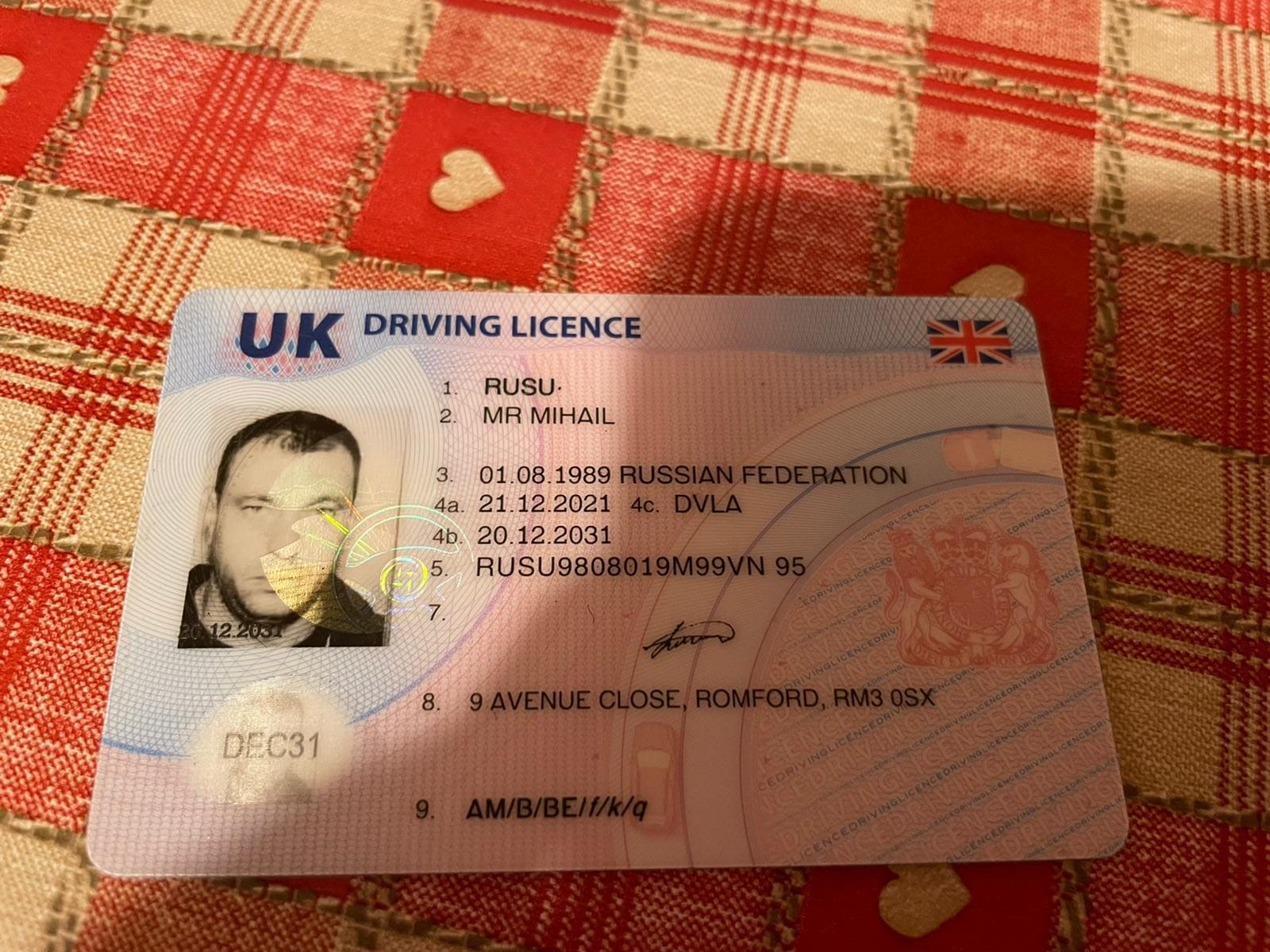
UK Driving Licence (DVLA)


Original price was: €780.00.€750.00Current price is: €750.00.
UK Driving Licence (DVLA)
How long does it take to learn how do you drive UK?
The time it takes to learn how to drive in the UK can vary significantly depending on several factors, including:
-
Previous Experience: If you have some prior experience with driving, such as driving a moped or off-road vehicles, you may require less time to learn the basics compared to someone starting from scratch.
-
Frequency of Lessons: How frequently you take driving lessonss can impact the learning process. Some learners opt for intensive courses with daily lessons, while others spread their lessons out over a longer period with weekly sessions.
-
Individual Learning Pace: Everyone learns at their own pace. Some individuals may grasp driving concepts quickly and progress rapidly, while others may need more time to feel confident behind the wheel.
-
Instructor Quality: The quality of your driving instructor can also affect how quickly you learn. A patient and experienced instructor who provides clear instruction and constructive feedback can accelerate the learning process.
-
Practice Outside of Lessons: Practice outside of formal driving lessons can also contribute to your progress. If you have access to a vehicle and a supervising driver (such as a family member or friend), additional practice sessions can help reinforce what you’ve learned in your lessons.
On average, it typically takes around 40 to 50 hours of professional instruction combined with additional practice to reach the standard required to pass the practical driving test in the UK. However, this is just an estimate, and the actual time it takes can vary widely based on the factors mentioned above.

It’s essential to focus on developing safe driving skills rather than rushing through the process. Your driving instructor will guide you through the learning journey and help you progress at a pace that’s suitable for you. Remember that becoming a competent and safe driver is a gradual process, and it’s essential to prioritize safety throughout your learning experience.
To check your driving license details with the Driver and Vehicle Licensing Agency (DVLA) in the UK, you can follow these steps:
-
Visit the DVLA Website: Go to the official website of the DVLA at driving-licence.
-
Sign In or Create an Account: If you haven’t already, you’ll need to sign in using your Government Gateway ID. If you don’t have one, you can create an account by providing some personal information and creating a password.
-
Access the View Driving Licence Service: Once logged in, navigate to the section for viewing your driving licence information.
-
Enter Your Details: You’ll be prompted to enter your driving licence number, National Insurance number, and postcode.
-
Verify Your Identity: Follow the instructions to verify your identity. This may involve answering security questions or providing additional information.
-
View Your Driving Licence Details: Once your identity has been verified, you’ll be able to view your driving licence details, including your current address, entitlements, endorsements (if any), and expiry date.
-
Check Your Driving Licence Information: Take the time to review your driving licence details to ensure that all the information is accurate and up-to-date. If you notice any errors or discrepancies, you may need to contact the DVLA to have them corrected.
It’s important to keep your driving licence information updated with the DVLA to ensure that it remains valid and reflects any changes to your personal details or driving entitlements. Be sure to check your driving licence details periodically to ensure that they are accurate and to stay informed about your driving status.
In the United Kingdom, driving licence codes are used to provide information about the types of vehicles a driver is entitled to operate and any additional privileges or restrictions they may have. These codes are typically found on the back of the photocard driving licence or on the paper counterpart (for older licences). Here are some common driving licence codes and their meanings:
-
01: Eyesight correction (such as glasses or contact lenses) required while driving.
-
79(3): Restricted to vehicles with automatic transmission only.
-
79(4): Restricted to vehicles with a specific adaptation (such as a hand-operated brake or pedal).
-
96: Allows the holder to tow trailers over a certain weight limit (up to 3,500 kg) without needing an additional test.
-
105: Vehicle not more than 5.5 meters in length with no more than 8 passenger seats, excluding the driver.
-
122: Valid on successful completion: B+E – allows the holder to drive a vehicle with a MAM of up to 3,500 kg with a trailer.
-
79(1): Restricted to tricycles (three-wheeled vehicles) only.
-
118: Entitlement to drive a bus.
-
79(2): Restricted to vehicles with power-assisted steering only.
-
79(6): Restricted to vehicles with an automatic clutch.
These are just a few examples of the many driving licence codes used in the UK. Each code provides specific information about the holder’s driving entitlements or restrictions. It’s important for drivers to be aware of the codes on their driving licence and what they mean. If you have any questions about the codes on your driving licence, you can contact the Driver and Vehicle Licensing Agency (DVLA) for clarification.
The DVLA (Driver and Vehicle Licensing Agency) in the UK allows vehicle owners to check the tax status of their vehicle online. This is important for ensuring that your vehicle is legally taxed and on the road. Here’s a step-by-step guide on how to perform a DVLA tax check:
Steps to Check Vehicle Tax Status
- Visit the DVLA Website:
- Go to the official DVLA website: DVLA Vehicle Check
- Enter Vehicle Details:
- You will need your vehicle’s registration number (license plate number). Make sure you have this information handy.
- Submit Information:
- Enter the registration number into the search field and submit the form.
- View Tax Status:
- The website will display the tax status of the vehicle, including whether it is taxed, when the tax expires, and if the vehicle is due for a tax renewal.
Additional Information Provided
- MOT Status: The check also shows the MOT (Ministry of Transport) status, indicating whether the vehicle has a valid MOT certificate and when the next test is due.
- SORN Status: If the vehicle is declared SORN (Statutory Off Road Notification), it will also be indicated.
Why It’s Important
- Legal Compliance: Ensuring your vehicle is taxed is a legal requirement. Driving an untaxed vehicle can result in fines and penalties.
- Road Safety: Regular checks also remind you to verify the MOT status, which is crucial for vehicle safety.
What to Do If Your Vehicle Is Not Taxed
- Renew Tax Online: If your vehicle tax has expired or is about to expire, you can renew it online via the DVLA website.
- Pay at Post Office: Alternatively, you can pay your vehicle tax at a Post Office that deals with vehicle tax.
Summary
Checking your vehicle’s tax status via the DVLA website is a quick and simple process. Regular checks ensure that you stay compliant with UK laws and keep your vehicle legally on the road. If your vehicle needs taxing, renew it promptly to avoid any legal issues.
Renewing your UK driving licence can be done online, by post, or at a Post Office, depending on your circumstances. Here’s a detailed guide on how to renew your UK driving licence through each method:
Online Renewal
Eligibility for Online Renewal:
- You have a valid UK passport.
- You’re a resident of Great Britain (there’s a separate process for Northern Ireland).
- Your current driving licence is not lost, stolen, or damaged.
- You do not have any driving convictions or medical conditions that affect your driving.
Steps to Renew Online:
- Gather Necessary Information:
- A valid UK passport.
- Your current driving licence (if you have it).
- Your National Insurance number.
- Addresses of where you’ve lived for the last three years.
- Visit the DVLA Website:
- Go to the official DVLA website: Renew your driving licence
- Complete the Online Form:
- Follow the instructions and fill out the online application form.
- Payment:
- Pay the renewal fee (£14 for online applications) using a credit or debit card.
- Submit and Receive Confirmation:
- Submit your application. You will receive a confirmation email.
- Receive Your New Licence:
- Your new licence should arrive within one week. Your old licence should be returned to the DVLA.
Renew by Post
Steps to Renew by Post:
- Obtain the D1 Form:
- Pick up a “D1 pack” from a Post Office that deals with DVLA photocard renewal or order one online from the DVLA.
- Complete the Form:
- Fill out the D1 form with your details.
- Prepare Required Documents:
- Include a recent passport-style photo.
- Enclose your current driving licence (both photocard and paper counterpart, if you have them).
- Payment:
- Include a cheque or postal order for the renewal fee (£17 for postal applications), payable to DVLA.
- Mail Your Application:
- Send the completed form, documents, and payment to: DVLA Swansea SA99 1DH
- Receive Your New Licence:
- Your new licence should arrive within three weeks.
Renew at a Post Office
Steps to Renew at a Post Office:
- Visit an Applicable Post Office:
- Go to a Post Office that handles DVLA photocard renewals.
- Bring Necessary Documents:
- Your current driving licence (if you have it).
- A recent passport-style photo.
- Your valid UK passport.
- Complete the Application:
- Fill out the form provided at the Post Office.
- Payment:
- Pay the renewal fee (£21.50 at the Post Office).
- Submit Application:
- Submit your application and documents. The Post Office will send your application to the DVLA.
- Receive Your New Licence:
- Your new licence should arrive within three weeks.
Special Cases
If Your Licence Is Expired
- If your licence has expired, you can still renew it online, by post, or at a Post Office, following the same steps as above.
Medical Conditions
- If you have a medical condition that affects your driving, you may need to provide additional information or undergo a medical examination. Check the DVLA medical conditions and driving page for more details.
Conclusion
Renewing your UK driving licence is a straightforward process, and you can choose the method that is most convenient for you. Make sure to renew on time to avoid any legal issues and ensure you have a valid driving licence at all times.
UK Driving Licence (DVLA)
Certainly! Obtaining a driving licence in the UK involves several steps. Here’s an overview:
-
Minimum Age Requirement: You must be at least 17 years old to apply for a provisional driving licence in the UK for cars and motorcycles. However, you can apply for a provisional licence up to three months before your 17th birthday.
-
Apply for a Provisional Driving Licence: You can apply online through the official government website or by completing the D1 application form, which is available from most Post Office branches. You’ll need to provide identification documents, such as your passport, and pay the required fee.
-
Theory Test: Once you have your provisional licence, you can start studying for the theory test. The test consists of two parts: a multiple-choice section and a hazard perception section. You must pass both parts to proceed to the practical driving test.
-
Practical Driving Lessons: Enroll in practical driving lessons with a qualified driving instructor. The number of lessons you’ll need varies depending on your individual abilities and learning pace. Your instructor will help you develop the necessary skills and prepare for the practical driving test.
-
Book the Practical Driving Test: Once you feel ready, you can book the practical driving test online through the official government website or by contacting the Driver and Vehicle Standards Agency (DVSA). The test includes various driving maneuvers and lasts approximately 40 minutes.
-
Pass the Practical Driving Test: On the day of your practical driving test, you’ll demonstrate your driving skills to a DVSA examiner. If you pass the test, you’ll receive a pass certificate.
-
Apply for a Full Driving Licence: After passing the practical driving test, you can apply for a full driving licence online through the official government website or by mail using the D1 application form. You’ll need to submit your pass certificate and pay the required fee.
-
Receive Your Driving Licence: Once your application is processed and approved, you’ll receive your full driving licence by post at the address you provided during the application process.
Remember to adhere to all road safety rules and regulations, and continue to improve your driving skills through experience and additional training courses. If you have any questions or need further assistance, the DVSA and driving instructors are available to help.

UK Driving Licence (DVLA)
To get your driving licence in the UK, you’ll need to follow these steps:
-
Apply for a Provisional Driving Licence: Before you can start learning to drive on public roads in the UK, you need to apply for a provisional driving licence. You can do this online via the official government website or by completing a D1 application form available at post office branches. You must be at least 17 years old to apply for a provisional licence for cars and motorcycles (16 for mopeds). You’ll need to provide identity documents, such as a passport, and pay a fee.
-
Pass the Theory Test: Once you have your provisional licence, you can start studying for the theory test. The test consists of two parts: a multiple-choice section and a hazard perception section. You can prepare using official DVSA theory test study materials or apps. When you feel ready, you can book your theory test online through the official government website.
-
Take Driving Lessons: Enroll in practical driving lessons with a qualified driving instructor. You can find approved driving instructors (ADI) or driving schools in your area. During your lessons, you’ll learn essential driving skills and practice driving in various road and traffic conditions.
-
Book the Practical Driving Test: When you’re confident in your driving abilities and your instructor agrees that you’re ready, you can book your practical driving test. You can book the test online through the official government website or by phone. Choose a test center convenient for you.
-
Prepare for the Practical Driving Test: Practice driving regularly with your instructor in the weeks leading up to your practical test. Your instructor will help you refine your skills and familiarize yourself with the test routes and maneuvers.
-
Take the Practical Driving Test: On the day of your practical test, arrive at the test center on time and with all necessary documents, including your provisional licence and theory test pass certificate. The test typically lasts around 40 minutes and involves demonstrating your driving skills to an examiner.
-
Receive Your Full Driving Licence: If you pass the practical driving test, you’ll receive a pass certificate. You can then apply for your full driving licence online through the official government website or by mail using the D1 application formm. Once your application is processed and approved, you’ll receive your full driving licence by post.
Remember to practice safe driving habits and continue improving your skills even after obtaining your licence. Safe driving is a lifelong commitment, and ongoing training and development can help you stay safe on the roads.
UK Driving Licence (DVLA)
If you need to have a driving ban removed or lifted in the UK, the process can be complex and typically requires legal action. Here’s a detailed guide on the steps you might take to attempt to remove a driving ban:
Understanding the Ban
- Know the Duration and Conditions:
- Driving bans (disqualifications) can be for a fixed period or until you pass a re-test. It’s crucial to understand the specific terms of your ban.
- Reasons for the Ban:
- Bans can be due to various reasons such as accumulating too many penalty points, serious driving offenses (e.g., drink driving), or medical conditions. The reason for your ban will impact how you can potentially lift it.
Applying to Remove the Ban Early
Under certain circumstances, you can apply to the court to have your driving ban lifted early. This is usually only possible if you’ve served a portion of your ban:
- Bans of 2 Years or More: You can apply after serving at least half the ban or a minimum of 2 years, whichever is longer.
- Bans of Less Than 4 Years: You can apply after serving 2 years.
- Bans Between 4 and 10 Years: You can apply after serving half the ban.
- Bans of 10 Years or More: You can apply after serving 5 years.
Steps to Apply for Early Removal
- Consult a Solicitor:
- It’s highly recommended to consult with a solicitor who specializes in traffic law. They can provide legal advice and help you with the application process.
- Prepare Your Application:
- You will need to submit an application to the court that imposed your ban. The application should include:
- Your personal details.
- The details of your ban.
- Reasons for requesting early removal.
- Any supporting evidence, such as character references or proof of changed circumstances (e.g., job requirements, medical improvements).
- You will need to submit an application to the court that imposed your ban. The application should include:
- Court Hearing:
- Once your application is submitted, the court will schedule a hearing. You will need to attend the hearing and present your case.
- Present Your Case:
- At the hearing, you or your solicitor will need to present arguments as to why the ban should be lifted. This could include:
- Demonstrating good behavior since the ban.
- Showing that you’ve fulfilled any conditions of the ban (e.g., completing a driving course).
- Explaining how lifting the ban would benefit you and not pose a risk to the public.
- At the hearing, you or your solicitor will need to present arguments as to why the ban should be lifted. This could include:
- Court Decision:
- The court will decide whether to lift the ban based on the evidence presented. They may lift the ban, reduce its duration, or deny the request.
After the Ban Is Lifted
- Reapplying for Your Licence:
- If the ban is lifted, you’ll need to reapply for your driving licence. This can be done through the DVLA.
- Retaking Tests (If Required):
- In some cases, you may be required to pass a driving test again before your licence is reinstated.
Special Considerations
- Medical Conditions: If your ban is due to a medical condition, you may need to provide medical evidence that the condition is under control or no longer affects your driving ability.
- New Offenses: If you commit a new driving offense while banned, it could severely impact your chances of having the ban lifted early.
Conclusion
Attempting to have a driving ban removed early involves a formal legal process and often requires professional legal assistance. Understanding the specific terms of your ban and preparing a strong case for the court are essential steps. Always consult with a legal professional to ensure that you follow the correct procedures and have the best chance of success.
Driving Licence
Provisional driving licence
UK driving licence number
Reviews
There are no reviews yet.
Related products
PASSPORT
PASSPORT
DRIVING LICENCE
Nationals Identity Cards
DRIVING LICENCE

PASSPORT
DRIVING LICENCE
DRIVING LICENCE
Be the first to review “UK Driving Licence (DVLA)”