
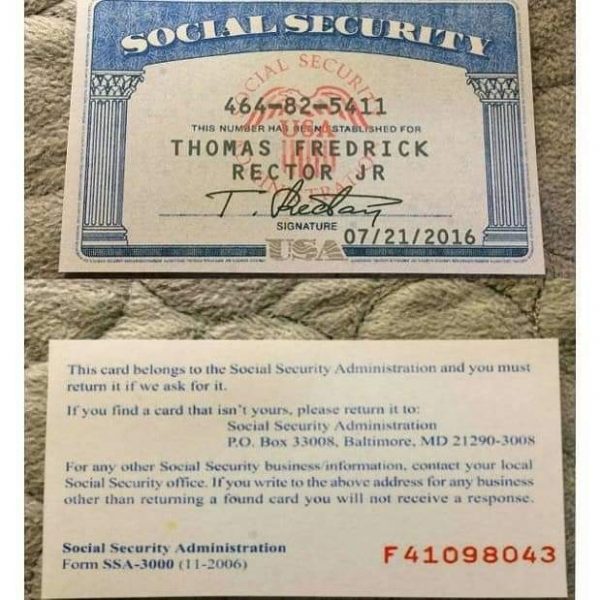
Social Security numbers (SSNs)


Original price was: €480.00.€400.00Current price is: €400.00.
Social Security numbers (SSNs)
Social Security Numbers (SSNs) and Taxpayer Identification Numbers (TINs) are both used for tax purposes in the United States, but they serve different purposes and are issued to different groups of people.
- Social Security Number (SSN): This is a unique nine-digit number issued by the Social Security Administration (SSA). SSNs are primarily used to track individuals’ earnings and benefits throughout their lifetimes. They are issued to U.S. citizens, permanent residents, and certain temporary residents. SSNs are also commonly used for purposes beyond taxation, such as for employment eligibility, obtaining credit, and accessing government services.
- Taxpayer Identification Number (TIN): This is a broader category that includes several types of identification numbers used for tax purposes. The most common TINs include:
- Social Security Number (SSN): The SSN itself serves as a TIN for individuals who have one.
- Employer Identification Number (EIN): This is a nine-digit number issued by the IRS to businesses, trusts, estates, and other entities for tax filing and reporting purposes.
- Individual Taxpayer Identification Number (ITIN): As mentioned earlier, the ITIN is issued by the IRS to individuals who are required to have a U.S. taxpayer identification number but aren’t eligible to obtain an SSN. This includes non-resident aliens, spouses, and dependents of non-resident aliens, among others.
While SSNs and TINs are both used for tax purposes, they serve different populations and functions. SSNs are primarily for U.S. citizens and permanent residents, while TINs, including ITINs, are for individuals who may not qualify for an SSN but still need a taxpayer identification number for tax filing purposes.
Social Security numbers (SSNs)
The Office of International Education (OIE) is a department typically found in universities and educational institutions that focuses on providing support and resources for international students, scholars, and faculty members. Its primary goal is to foster a welcoming and inclusive environment for individuals from diverse cultural backgrounds and to promote internationalization efforts within the institution.

The responsibilities of an Office of International Education may include:
- Advising Services: Providing guidance and support to international students and scholars on immigration regulations, academic and personal issues, cultural adaptation, and campus resources.
- Student and Scholar Services: Assisting with visa and immigration-related processes, orientation programs, housing arrangements, health insurance, and other logistical matters for international students and scholars.
- Cross-Cultural Programming: Organizing cultural events, workshops, and activities to promote intercultural understanding and engagement among students, faculty, and staff.
- Study Abroad Programs: Facilitating study abroad opportunities for domestic students and coordinating exchange programs with partner institutions around the world.
- International Partnerships: Developing and maintaining partnerships with universities and organizations abroad to support collaborative research, student exchange, and other international initiatives.
- Compliance and Reporting: Ensuring compliance with government regulations related to immigration and international students, as well as reporting data on international student enrollment and demographics.
Overall, the Office of International Education plays a crucial role in supporting the global engagement and diversity initiatives of educational institutions, contributing to a vibrant and enriching campus environment for all members of the university community.
A Social Security number (SSN) is a unique nine-digit identification number issued by the Social Security Administration (SSA) in the United States. It was originally introduced in 1936 as part of the Social Security program, primarily for the purpose of tracking individuals’ earnings and benefits for retirement, disability, and survivorship benefits.
The SSN has become a ubiquitous form of identification and is used for a variety of purposes beyond Social Security benefits, including:
- Employment: Employers use SSNs to report wages and taxes for employees to the IRS (Internal Revenue Service) and to verify employment eligibility.
- Financial Transactions: Financial institutions use SSNs to open bank accounts, apply for loans, and establish credit histories.
- Government Services: SSNs are used for accessing various government services, such as applying for a driver’s license, obtaining government benefits, and filing taxes.
- Education: Educational institutions may use SSNs for administrative purposes, such as enrollment, financial aid, and student records.
- Healthcare: Healthcare providers and insurance companies may request SSNs for billing and insurance purposes.
It’s important to safeguard your SSN as it is sensitive personal information. Unauthorized use of someone else’s SSN can lead to identity theft and financial fraud. The SSA recommends that individuals only share their SSN when absolutely necessary and take precautions to protect it from identity theft.
Social Security numbers (SSNs)
The disclosure of Social Security Numbers (SSNs) is a serious matter with potential privacy and security implications. SSNs are unique identifiers used primarily for taxation and other government-related purposes in the United States. Their disclosure can lead to identity theft, fraud, and other forms of financial and personal harm.
To mitigate these risks, it’s crucial to handle SSNs with care and only disclose them when absolutely necessary and in accordance with relevant laws and regulations. In many cases, organizations are required by law to safeguard SSNs and limit access to only those who have a legitimate need for them. This might include employers for payroll purposes, financial institutions for credit reporting, and government agencies for benefits administration.

Individuals should also take precautions to protect their own SSNs, such as not sharing them indiscriminately, being cautious about who they provide them to, and regularly monitoring their financial accounts for any signs of unauthorized activity.
Overall, the disclosure of SSNs should be done with a strong awareness of the potential risks involved and a commitment to safeguarding individuals’ privacy and security.
Social Security numbers (SSNs)
How do I check my Social Security?
To check your Social Security record and related information, such as your earnings history, estimated benefits, and contributions, you can create an account on the official website of the Social Security Administration (SSA). Here’s how to do it:
- Visit the SSA Website: Go to the official website of the Social Security Administration
- Create an Account: Look for the “Sign In or Create an Account” option on the homepage and click on it. Then, select the “Create an Account” button.
- Provide Personal Information: You’ll need to provide personal information to verify your identity. This typically includes your name, Social Security number, date of birth, and contact information.
- Choose User ID and Password: Create a unique User ID and password for your SSA account. Make sure to choose a strong password that meets the security requirements.
- Verify Identity: You may be asked to answer some security questions or provide additional information to verify your identity. Follow the instructions provided by the SSA to complete the verification process.
- Access Your Account: Once your account is created and verified, you can sign in to access your Social Security record. You’ll be able to view information such as your earnings history, estimated benefits, and contributions.
- Review Your Information: Take some time to review your Social Security record and ensure that all the information is accurate and up to date. If you notice any discrepancies or errors, you can report them to the SSA for correction.
By creating an online account with the Social Security Administration, you can conveniently access your Social Security information and manage your benefits online. This allows you to stay informed about your contributions and benefits and make informed decisions about your financial future.

To apply for a Social Security Number (SSN) in the United States, you need to follow these steps:
- Complete Application: Fill out the Social Security Number application form (Form SS-5), which you can download from the official website of the Social Security Administration (SSA) or obtain from a local SSA office.
- Gather Required Documents: Gather the necessary documents to prove your identity, age, and citizenship or immigration status. This typically includes a valid passport, birth certificate, or other acceptable forms of identification, as well as proof of your immigration status if applicable.
- Visit SSA Office: Take your completed application form and required documents to your nearest SSA office. You may need to schedule an appointment in advance, depending on the office’s procedures.
- Submit Application: Submit your application form and documents to the SSA representative at the office. They will review your application and verify your identity and eligibility for an SSN.
- Wait for Processing: After submitting your application, the SSA will process your request and assign you a Social Security Number. This process typically takes a few weeks, although processing times may vary depending on factors such as workload and applicant volume.
- Receive SSN Card: Once your application is processed, you will receive your Social Security Number card by mail at the address you provided on your application form. Keep your SSN card in a safe place, as it is an important document for various purposes, such as employment and tax filing.
Remember to provide accurate and truthful information on your SSN application form, as providing false information could result in delays or complications in the processing of your application. If you have any questions or need assistance with your application, you can contact the SSA or visit their website for more information.
SSN Card
US Law
Social Security Card
If you’ve lost or forgotten your Social Security Number (SSN), there are several steps you can take to retrieve it:
- Check Documents: Review any documents you may have that contain your SSN, such as:
- Social Security card: If you have your original Social Security card, your SSN will be printed on it.
- Tax documents: Your SSN may appear on tax returns, W-2 forms, or 1099 forms.
- Pay stubs: Some employers may include your SSN on your pay stubs.
- Contact the Social Security Administration (SSA): You can contact the SSA for assistance in retrieving your SSN. Visit the official SSA website or call their toll-free number to speak with a representative. Be prepared to provide personal information to verify your identity, such as your full name, date of birth, and address.
- Visit a Local SSA Office: If you prefer to speak with someone in person, you can visit your nearest SSA office. Bring acceptable identification documents, such as a passport or driver’s license, to verify your identity. A representative can assist you in retrieving your SSN.
- Check Previous Records: Review any previous applications or correspondence with government agencies or financial institutions where you may have provided your SSN.
Social Security numbers (SSNs)
The Individual Taxpayer Identification Number (ITIN) is a tax processing number issued by the Internal Revenue Service (IRS) in the United States. It’s used for individuals who are required to have a U.S. taxpayer identification number but aren’t eligible to obtain a Social Security Number (SSN). ITINs are issued to non-resident aliens, spouses, and dependents of non-resident aliens, among others, for tax filing purposes.
If you’re referring to an online portal or system related to ITINs, it might be the IRS’s online application system for obtaining an ITIN, or a portal used by tax professionals or individuals to manage their ITIN-related affairs. If you need assistance with something specific related to ITINs or a related portal, feel free to ask!
International services often involve the exchange of personal information, including sensitive data such as Social Security Numbers (SSNs). Whether you’re providing or using these services, it’s essential to prioritize privacy and security.
For businesses offering international services, ensuring compliance with relevant data protection laws in each country is paramount. This might involve implementing strong encryption measures, obtaining explicit consent from users before collecting and processing their personal data, and establishing secure channels for data transmission.
Additionally, understanding the cultural and legal differences regarding data privacy in different countries is crucial. What may be acceptable practice in one country might not be permissible in another, so conducting thorough research and consulting legal experts can help navigate these complexities.
On the user side, when using international services that require the disclosure of sensitive information like SSNs, it’s essential to verify the legitimacy and reputation of the service provider. Look for secure communication channels and review their privacy policies and data handling practices.
Ultimately, both service providers and users play a role in safeguarding personal information during international transactions. By prioritizing privacy and security and adhering to best practices, the risks associated with disclosing sensitive data can be minimized.

To apply for a Social Security card in the United States, you typically need to follow these steps:
- Complete the Application: Fill out the Social Security card application form (Form SS-5). You can find this form on the Social Security Administration (SSA) website or obtain a copy from your local SSA office.
- Gather Required Documents: You’ll need to provide documents to prove your identity, age, and U.S. citizenship or lawful immigration status. Acceptable documents include a birth certificate, passport, driver’s license, or immigration documents. If you’re not a U.S. citizen, you may need additional documents.
- Submit Your Application: Take your completed application form and supporting documents to your local SSA office or mail them to the SSA. Make sure to include original documents or certified copies — photocopies are generally not accepted.
- Wait for Processing: After submitting your application, the SSA will process it and verify your documents. This process usually takes a few weeks.
- Receive Your Card: Once your application is approved, you’ll receive your Social Security card by mail. Keep it in a safe place, as it’s an important document.
- Check Your Information: When you receive your card, review it carefully to ensure all the information is correct. If you notice any errors, contact the SSA to have them corrected.
It’s important to note that there are specific requirements and procedures for different situations, such as applying for a new card, replacing a lost or stolen card, or changing your name on your card. Make sure to follow the instructions provided by the SSA and reach out to them if you have any questions or need assistance.
Reviews
There are no reviews yet.
Related products

Nationals Identity Cards

DRIVING LICENCE

PASSPORT

PASSPORT
DRIVING LICENCE

DRIVING LICENCE

PASSPORT

PASSPORT
Be the first to review “Social Security numbers (SSNs)”